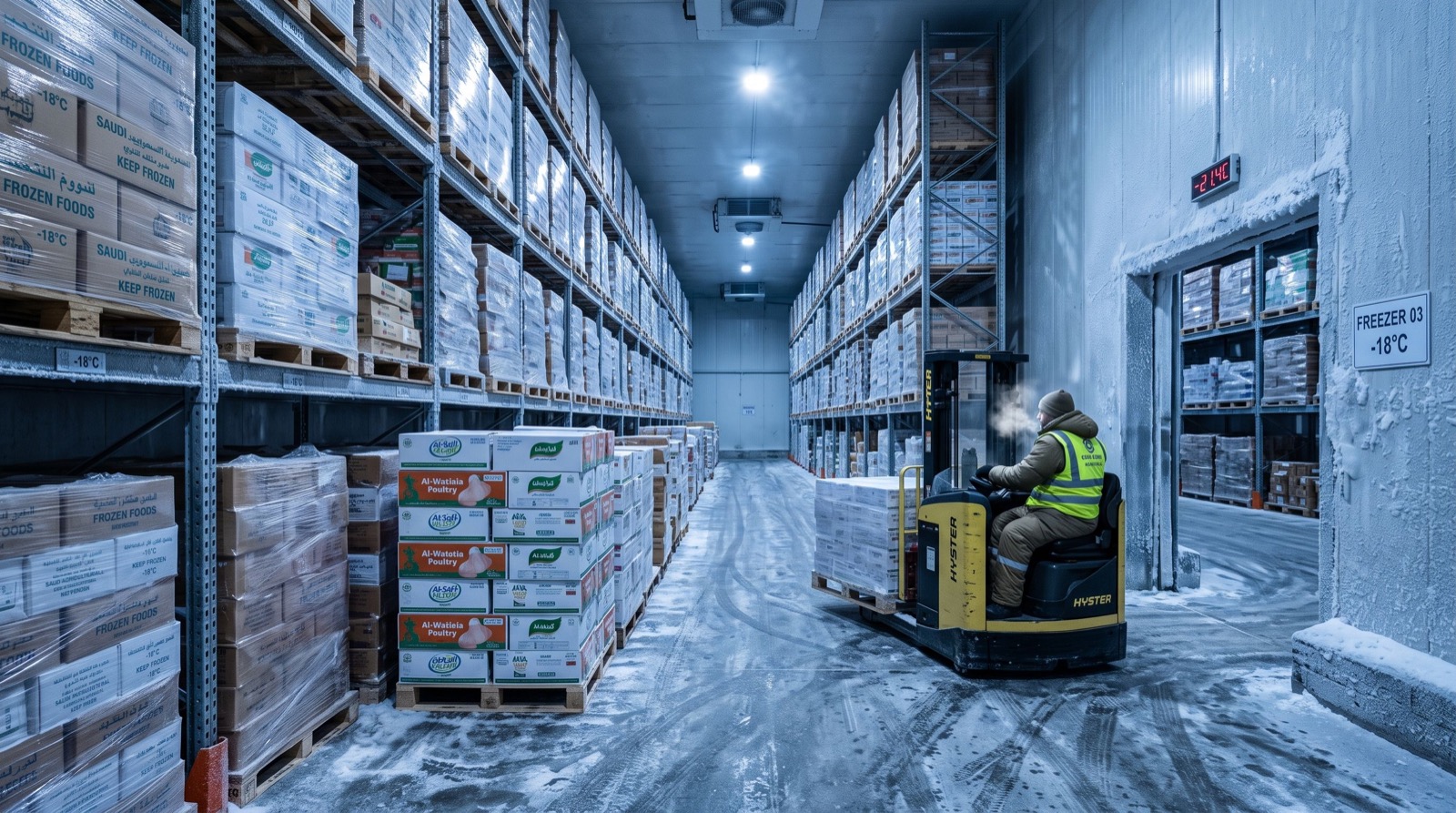
Frozen Storage in Saudi Arabia: A Cold-Chain Guide for 2026
Frozen storage in Saudi Arabia is the invisible backbone of the food industry, keeping meat, seafood, dairy, and imported goods safe from the moment they arrive until they reach a plate. In a country where outdoor temperatures can exceed 45°C, even a short lapse in the cold chain can spoil an entire shipment. This 2026 guide explains how frozen storage works, why it matters for businesses of every size, and how to choose a facility that protects both your stock and your reputation.
Whether you run a restaurant in Riyadh, an importing business in Jeddah, or a catering operation in Dammam, understanding the cold chain helps you cut waste, meet food-safety rules, and keep customers coming back. Let us break down what frozen storage really involves.
What Frozen Storage Means and How It Works
Frozen storage keeps products at or below −18°C, the internationally recognised threshold at which microbial activity effectively stops. At this temperature, meat, fish, and prepared meals can be held for months without dangerous bacterial growth, provided the temperature never drifts upward.
The science is straightforward but demanding. Freezing slows the chemical reactions that cause spoilage, but every fluctuation costs quality. Repeated thawing and refreezing forms ice crystals that damage cell structure, drain moisture, and leave food dry or mushy. That is why a stable, uninterrupted temperature is far more valuable than simply “very cold.”
Blast freezing versus holding storage
Two stages matter in most operations. Blast freezing drops products to their core temperature quickly, locking in freshness and texture. Holding storage then maintains that temperature for the long term. A serious facility offers both, because rapid freezing at the start determines how good the food still is months later.
Why Frozen Storage Matters for Saudi Businesses
The Kingdom imports a large share of its food, which means goods often travel long distances before they reach local shelves. A reliable cold chain protects that investment and keeps businesses compliant with the Saudi Food and Drug Authority, which enforces strict handling and temperature standards. According to the Food and Agriculture Organization of the United Nations, effective cold-chain management is one of the most powerful tools for reducing global food loss.
Beyond compliance, there is a clear commercial case. Reliable Frozen Storage lets businesses buy in bulk when prices are low, hold seasonal stock, and reduce emergency purchases. For growing companies, partnering with trusted professionals who manage temperature and logistics frees owners to focus on their core trade instead of worrying about a failing freezer.
Types of Cold Storage: Choosing the Right Temperature Band
Not all cold storage is frozen storage. Matching the product to the correct temperature band prevents both spoilage and wasted energy. The table below outlines the common ranges used across the Kingdom.
| Storage Type | Temperature Range | Typical Products |
|---|---|---|
| Frozen storage | −18°C and below | Meat, seafood, ice cream, ready meals |
| Chilled storage | 0°C to 4°C | Dairy, fresh produce, deli items |
| Cool storage | 8°C to 15°C | Beverages, some fruits, chocolate |
| Ambient storage | Room temperature | Canned goods, grains, dry stock |
Many operations need more than one band at the same time. A caterer might keep proteins frozen, dairy chilled, and cleaning stock separate. In fact, dedicated Storage for Cleaning Supplies should always be kept apart from food to avoid contamination, a rule inspectors check closely.
How to Choose a Frozen Storage Provider
Selecting the right facility is a decision that affects food safety, cost, and customer trust. Use this checklist during your search:
- Temperature monitoring. Look for 24/7 digital logging with alerts, not manual checks.
- Backup power. A generator that starts within seconds is non-negotiable in the Saudi climate.
- Hygiene standards. Clean floors, sealed doors, and documented sanitation routines.
- Traceability. Systems that record what entered, when, and at what temperature.
- Location and access. Proximity to ports or your outlets shortens transit time and reduces risk.
Reliability during storms and power fluctuations is where good providers prove their worth. Ask directly what happens during an outage and request their temperature logs from the last hot season. A confident operator shares this data without hesitation.
Reducing waste through smart inventory
Frozen storage is only as good as the rotation system around it. Applying first-in, first-out rules, labelling every batch with a date, and reviewing stock weekly prevents forgotten items from expiring in a back corner. Combined with reliable freezing, disciplined rotation can cut food waste dramatically and protect thin margins.
Best Practices for Keeping the Cold Chain Intact
The cold chain fails at the weak links, not usually inside the freezer itself. Protect it with these habits:
- Move products from delivery vehicle to freezer as quickly as possible.
- Never overload a unit; airflow around packages keeps temperatures even.
- Keep doors closed and limit how often staff open them during peak heat.
- Train employees to spot and report temperature warnings immediately.
- Schedule preventive maintenance before, not after, the summer season.
Each of these is simple, but together they form the difference between a stable operation and one that loses a shipment every few months.
Frequently Asked Questions
What temperature is required for frozen storage in Saudi Arabia?
Frozen storage should hold products at −18°C or below. This is the standard recognised by food-safety authorities because it halts the bacterial growth that causes spoilage, keeping meat, seafood, and prepared meals safe for months.
What is the difference between frozen and chilled storage?
Frozen storage keeps goods at −18°C or colder for long-term preservation, while chilled storage holds items at 0°C to 4°C for fresh products like dairy and produce that must stay cold but not solid.
How long can food stay in frozen storage?
Most frozen meats and seafood keep their quality for several months, and some items last a year or more. The key is a stable temperature; every thaw-and-refreeze cycle shortens shelf life and harms texture.
Do I need backup power for frozen storage?
Yes. In the Saudi climate, a power cut can raise temperatures within minutes. A fast-starting generator is essential, and any provider you consider should demonstrate their backup system works reliably.
Conclusion
Frozen storage in Saudi Arabia is far more than a big freezer; it is a disciplined system of temperature control, monitoring, and rotation that protects food, profit, and public health. As you plan for 2026, focus on providers that log temperatures continuously, maintain backup power, and separate food from non-food stock. Get those fundamentals right, match each product to its correct temperature band, and your cold chain will hold strong through the hottest Saudi summer. Start by auditing your current setup today, and turn frozen storage from a worry into a competitive advantage.